Best Maltego Alternative for Modern OSINT Investigations
Looking for a Maltego alternative? Discover why modern investigation teams are moving from standalone link analysis to unified investigation workspaces.
Published
June 03, 2026
Updated
June 03, 2026
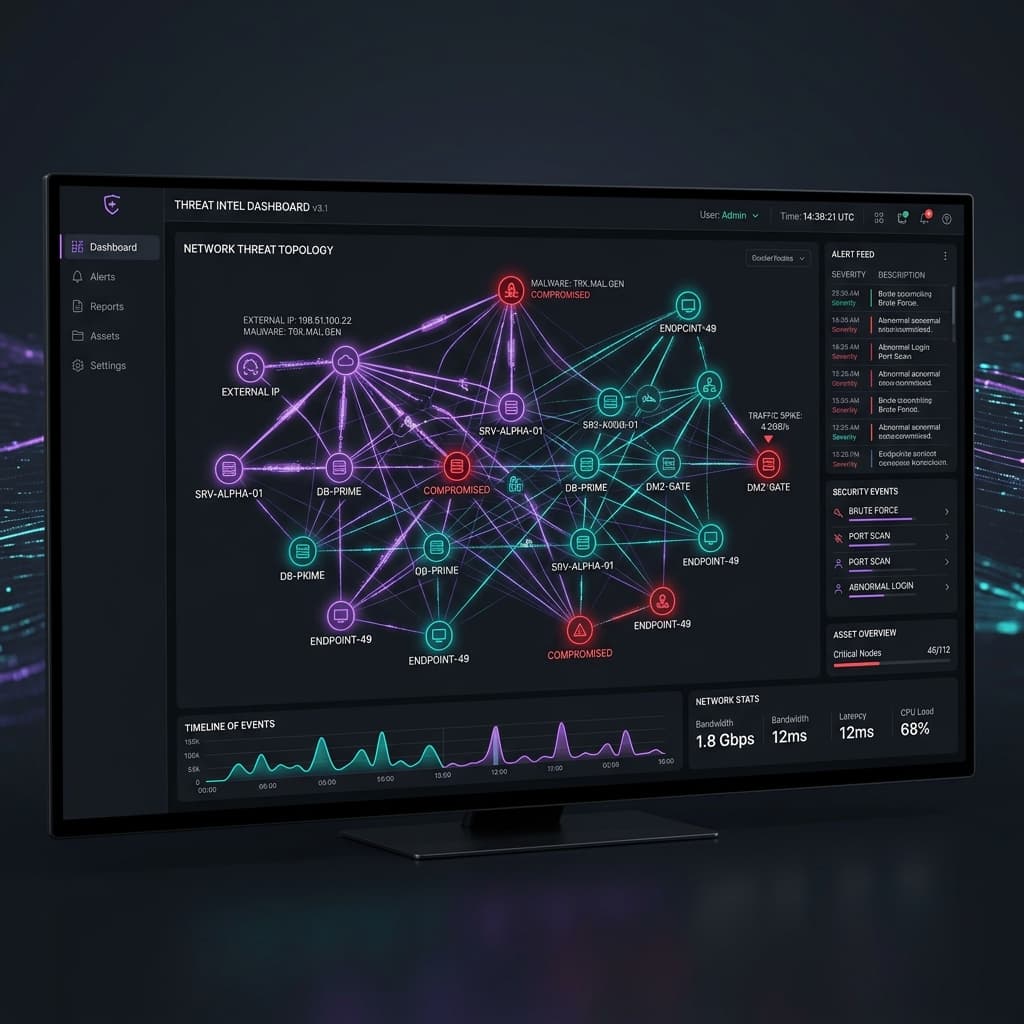
Maltego is one of the most recognized names in link analysis and investigative graphing.
If you are searching for a Maltego alternative, you probably already know what it does well. You are likely trying to solve something it does not handle cleanly: investigation management, evidence capture, team workflows, or reporting.
This article looks at where Maltego shines, where it becomes limiting, and what to consider if you need more than graph analysis.
What is Maltego?
Maltego is a graphical link analysis tool used to visualize relationships between entities.
Investigators use it to map connections between domains, IP addresses, email addresses, social accounts, phone numbers, and other data points. It is especially popular in cyber threat intelligence, fraud investigations, and digital forensics.
Key capabilities include:
- Visual graph analysis
- Transforms that pull data from third-party sources
- Entity-based data modeling
- Collaboration through Maltego XL or server editions
- A large ecosystem of commercial transforms
Maltego Strengths
Maltego has real strengths that keep it relevant:
- Mature graph engine. It has been optimized for link analysis over many years.
- Wide transform library. You can enrich entities from many external sources.
- Familiar interface. Many analysts already know how to use it.
- Strong for single-purpose graph work. If your job is mapping infrastructure, Maltego delivers.
Maltego Limitations
Maltego is a graphing tool, not a full investigation workspace. That distinction matters when your work goes beyond visualization.
Common limitations include:
- No native evidence capture. You cannot archive web pages, take structured screenshots, or preserve source provenance inside the graph.
- No case management. Investigations are not organized as cases with chronology, notes, and evidence folders.
- Limited reporting. Exporting findings into a structured report usually requires manual reconstruction.
- Transform licensing adds up. Advanced transforms are often priced separately, which increases total cost.
- Collaboration friction. Team workflows can feel bolted on rather than designed in.
Why Some Teams Look for Alternatives
Teams start looking for a Maltego alternative when their work expands from graphing to full investigations.
Typical triggers include:
- Needing to capture and preserve web evidence
- Building reusable case files
- Producing client-ready reports
- Working as a team across multiple investigations
- Reducing reliance on expensive per-transform licensing
If your workflow is mostly graph analysis with occasional enrichment, Maltego may still fit. If you need an integrated investigation environment, it probably will not.
Maltego vs Argus
| Capability | Maltego | Argus |
|---|---|---|
| Link analysis and graphing | Yes | Yes |
| Evidence capture and archiving | No | Yes |
| Case-based investigation workspace | Limited | Yes |
| Structured notes and chronology | No | Yes |
| Built-in reporting | Limited | Yes |
| Team collaboration | Partial | Yes |
| Open-source transforms | Some | Extensible |
Which One Should You Choose?
Choose Maltego if your primary need is advanced link analysis and you already have a separate workflow for evidence, notes, and reporting.
Choose Argus if you want graph analysis combined with evidence capture, case management, and reporting inside one workspace.
The decision usually comes down to scope: graph-only tool versus end-to-end investigation platform.
If you are evaluating a Maltego alternative, you can explore Argus Labs to see how it combines graph analysis with evidence and case workflows.